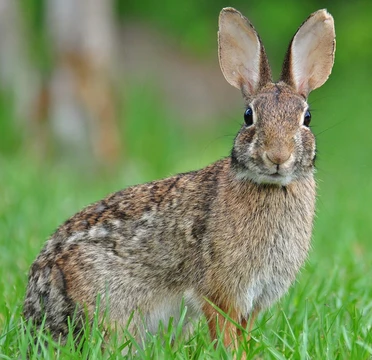
Groundhog
A lowland marmot crucial to soil health across North America.

Paul Danese · CC BY-SA 4.0
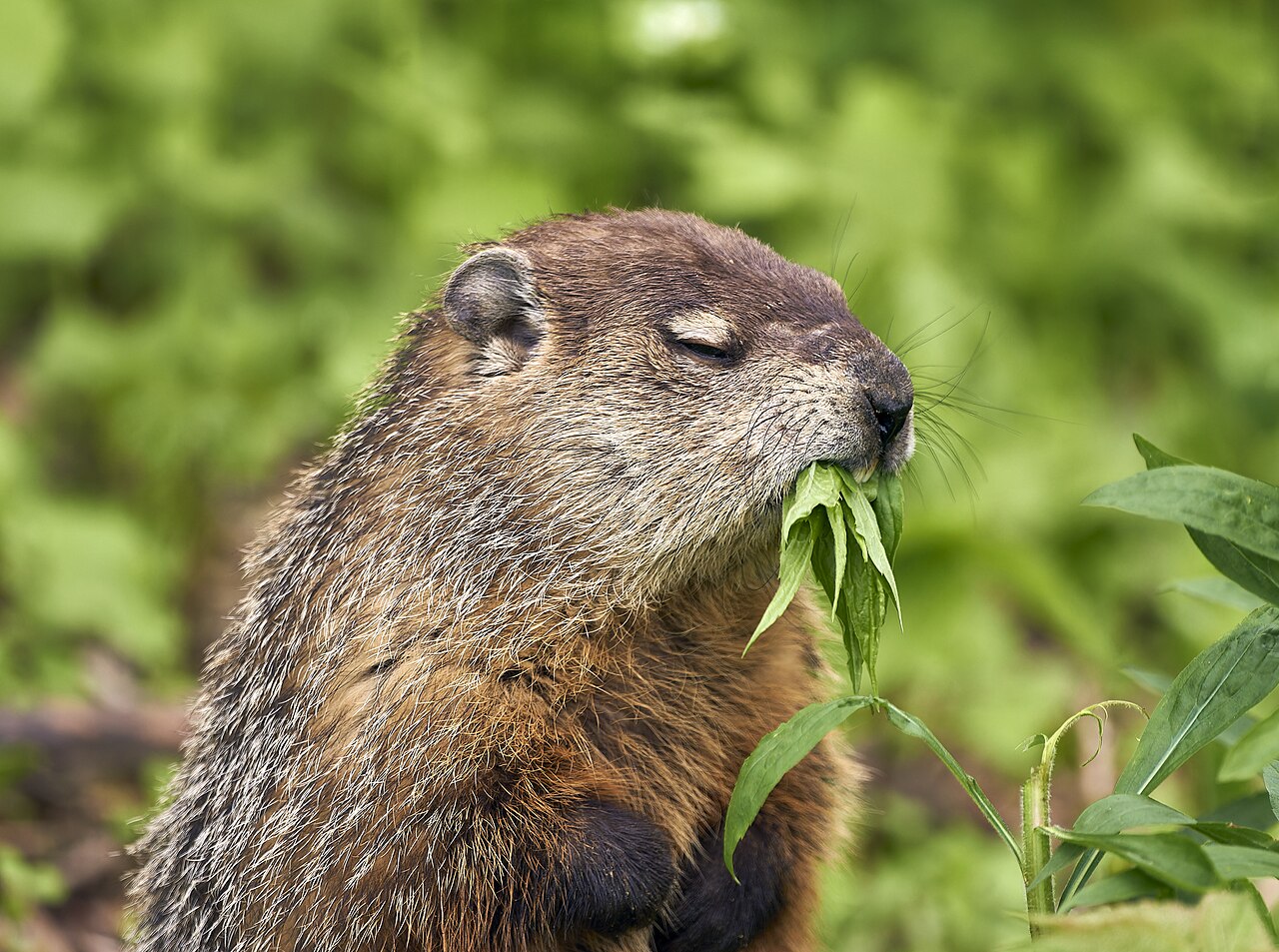
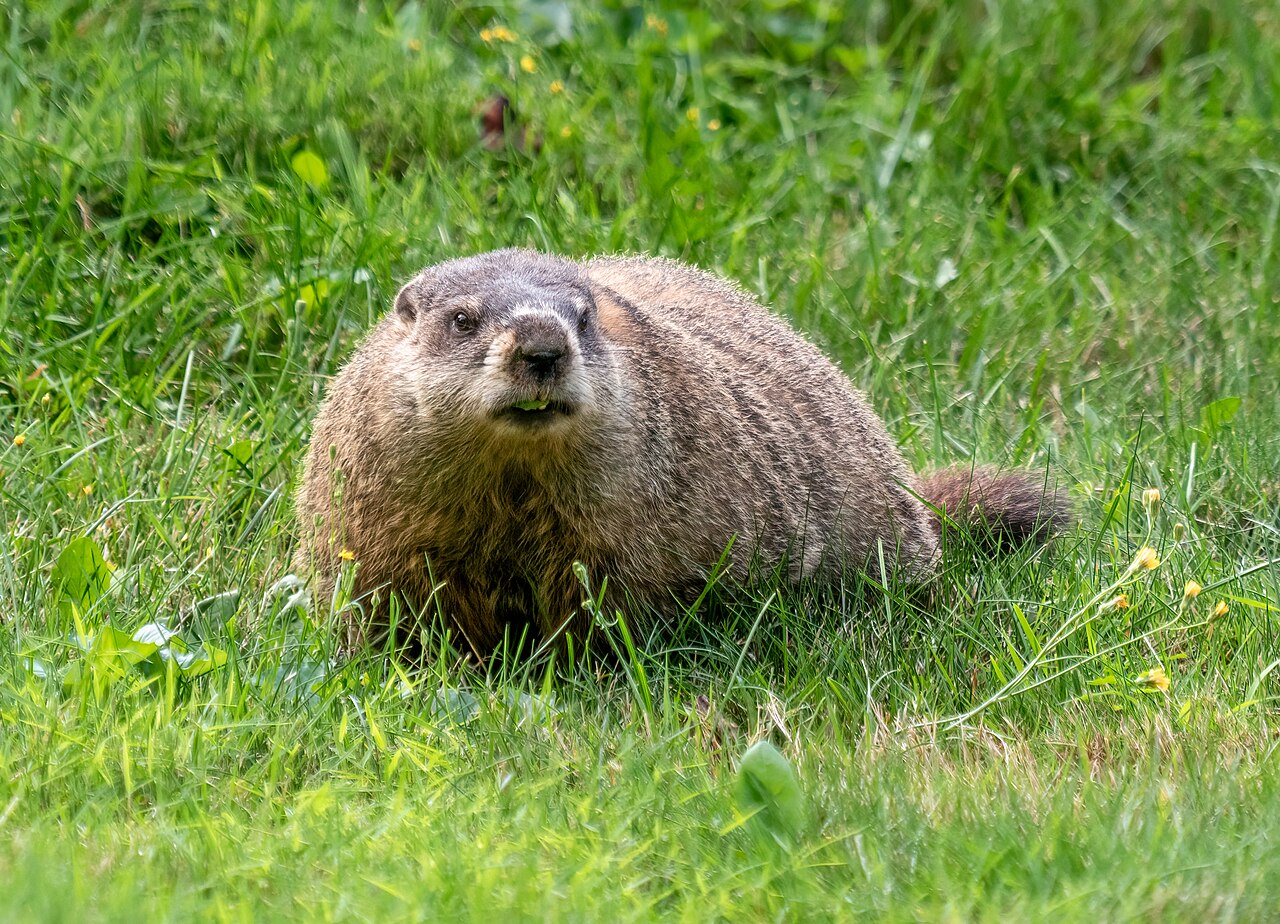
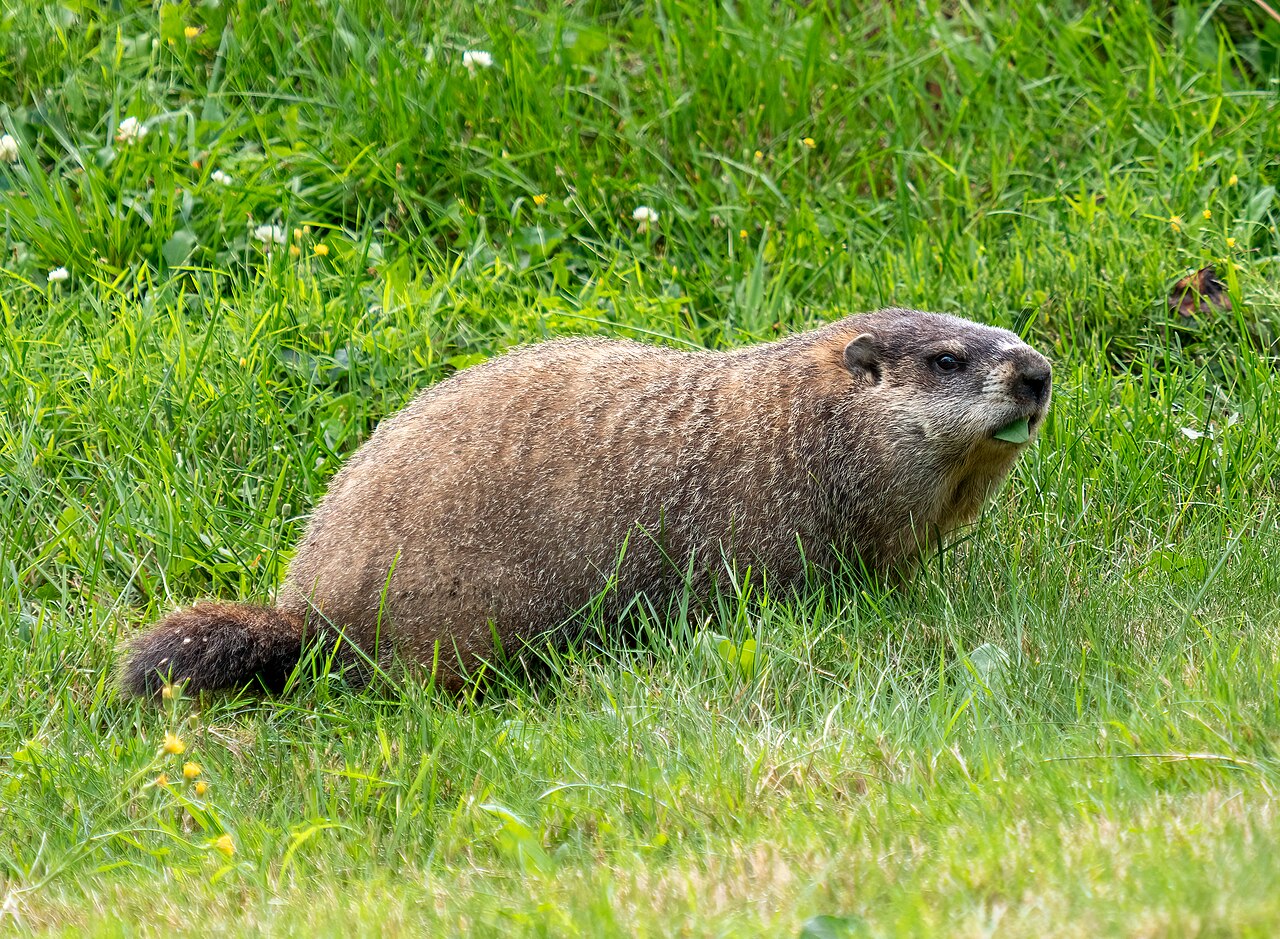
The groundhog, scientifically named *Marmota monax* and often called the woodchuck, is a rodent in the squirrel family, part of the larger group of ground squirrels known as marmots. Unlike most marmots, which prefer rocky, mountainous terrain, this species sticks to lowland areas across much of North America, ranging from the eastern United States through Canada and into Alaska. These animals play a key role in their ecosystems by aerating and enriching soil in woodlands and plains, making them vital habitat engineers. Common names for the groundhog include chuck, wood-chuck, groundpig, whistle-pig, whistler, thickwood badger, Canada marmot, monax, moonack, weenusk, red monk, land beaver, and, among French Canadians in eastern Canada, siffleux. The term "thickwood badger" was used in the Northwest to set it apart from the prairie badger. *Monax* (or *Móonack*) comes from an Algonquian word meaning "digger" (compare Lenape *monachgeu*). Young groundhogs are sometimes called chucklings. The name "woodchuck" has nothing to do with wood or chucking; it derives from an Algonquian (likely Narragansett) term, *wuchak*. This similarity inspired the well-known tongue-twister: "How much wood would a woodchuck chuck / if a woodchuck could chuck wood? / A woodchuck would chuck all the wood he could / if a woodchuck could chuck wood!"
In terms of size, the groundhog is the largest sciurid within its geographic range, except in British Columbia, where the hoary marmot may rival it. Adults range from 41.8 to 68.5 cm (16 7/16 to 26 15/16 inches) in total length, with a tail measuring 9.5 to 18.7 cm (3 3/4 to 7 3/8 inches). Typical adult weights fall between 2 and 6.3 kg (4 lb 7 oz to 13 lb 14 oz). Males are slightly larger than females on average, and like all marmots, they are much heavier in autumn (during hyperphagia) than when they emerge from hibernation in spring. Year-round, adult males average 3.83 kg (8 lb 7 oz), with spring-to-fall weights from 3.1 to 5.07 kg (6 lb 13 oz to 11 lb 3 oz); females average 3.53 kg (7 lb 13 oz), with a spring-to-fall range of 3.08 to 4.8 kg (6 lb 13 oz to 10 lb 9 oz). These seasonal shifts reflect fat storage and use. Groundhogs gain weight each year for the first two or three years, then plateau. They have four incisors that
- Scientific name
- Marmota monax (originally Mus monax)
- Family
- Sciuridae
- Geographic range
- Eastern United States, across Canada, into Alaska
- Average adult weight
- 2 to 6.3 kg (4 lb 7 oz to 13 lb 14 oz)
- Average adult length
- 41.8 to 68.5 cm (16+7⁄16 to 26+15⁄16 in)
- Known for
- Crucial habitat engineer; whistle-pig; subject of tongue-twister
Lore & Background
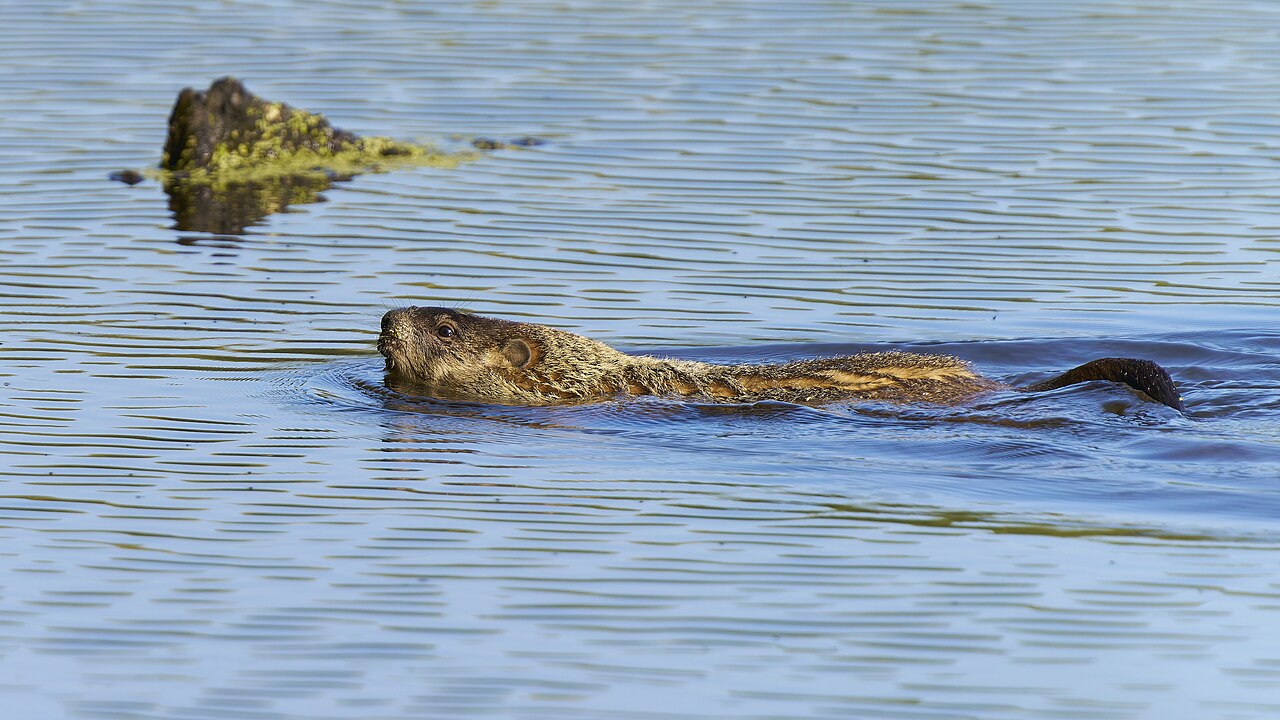
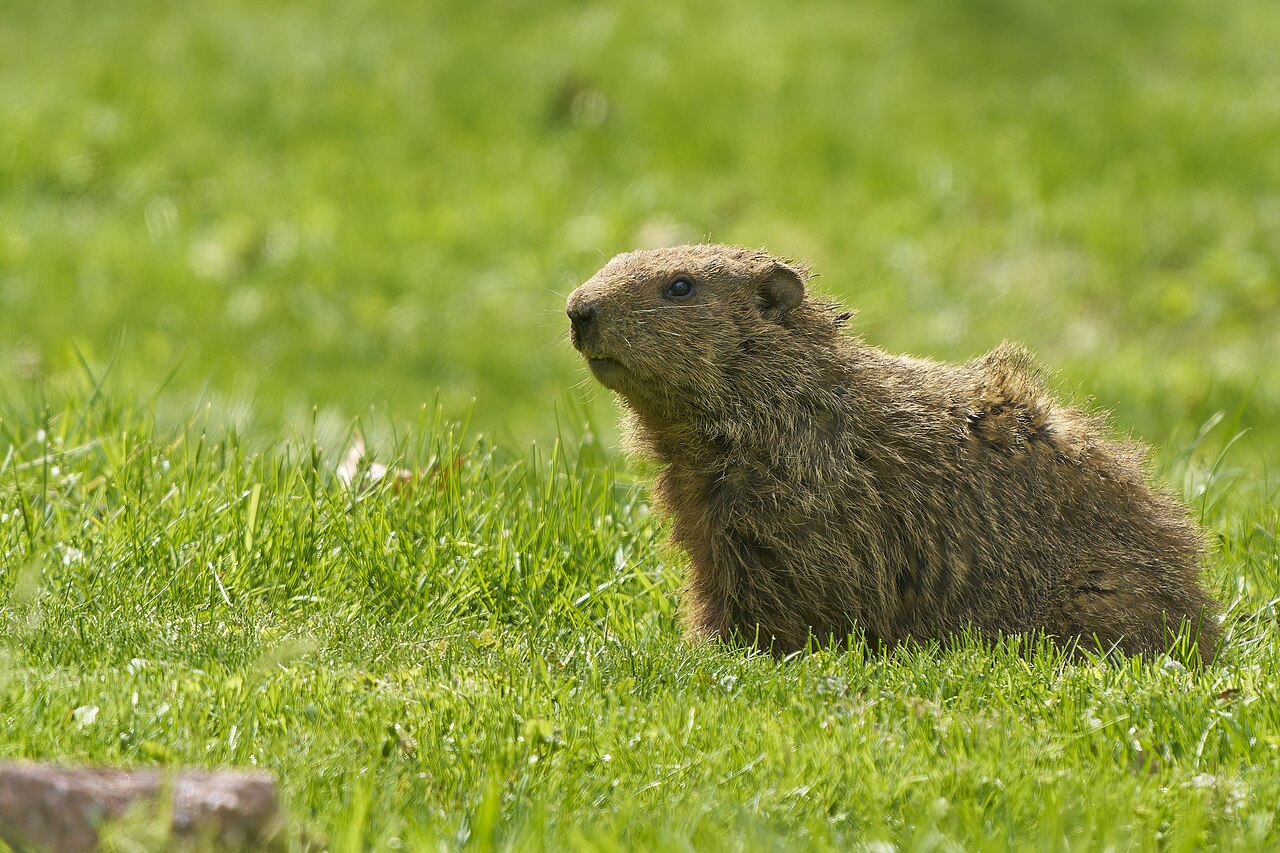
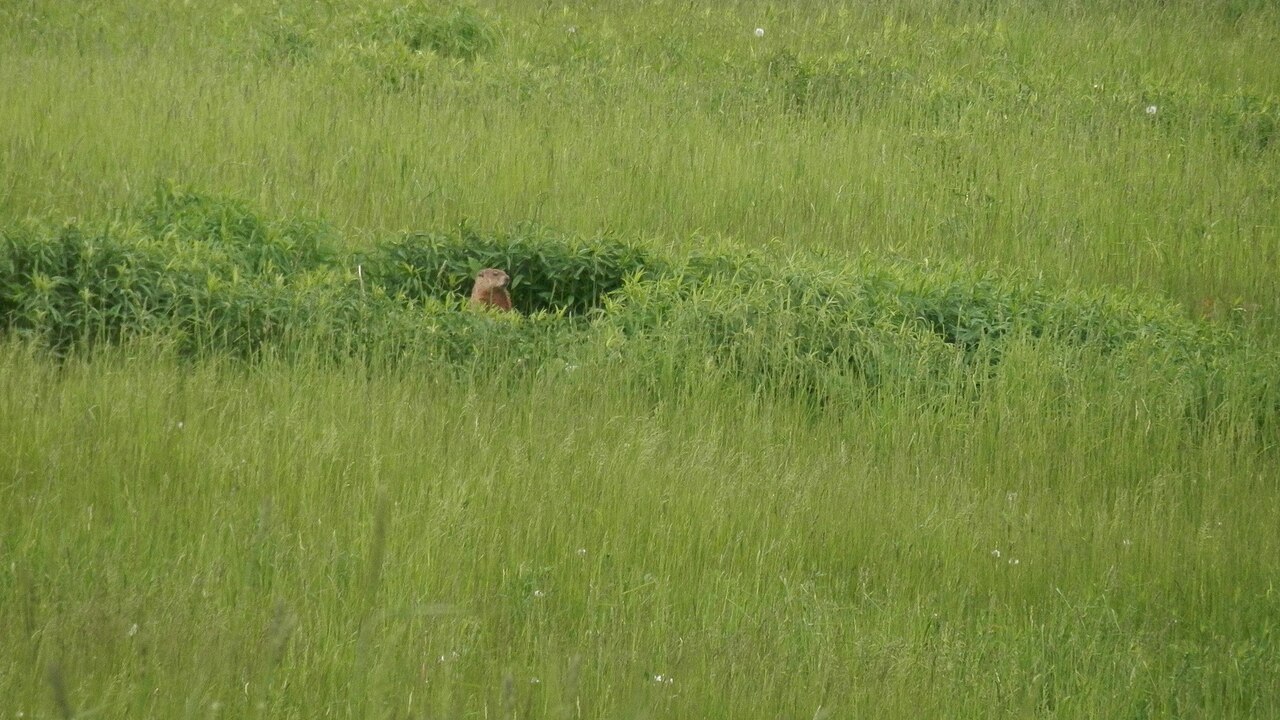
The groundhog is exceptional among marmots as a lowland animal, while other marmots live in rocky and mountainous areas. It is considered one of the most solitary of marmot species, though it lives in aggregations and its social organization varies across populations. Male and female interactions are usually limited to the mating season, but certain populations have been observed to form long-term adult male-female associations throughout the year. The groundhog is an extremely intelligent animal, forming complex social networks and kinship with its young, communicating threats through whistling, and working cooperatively to accomplish tasks such as burrowing. Common names include chuck, wood-chuck, groundpig, whistle-pig, and siffleux among French Canadians. The name 'woodchuck' stems from an Algonquian name, wuchak, and is not related to wood or chucking. The groundhog is the largest sciurid in its geographical range, except in British Columbia where its range may be comparable to that of the hoary marmot. Adults have four incisors that grow 1.5 mm per week and are white to ivory-white, unlike many other rodents. Groundhogs are well-adapted for digging, with powerful, short legs and broad, long claws. Groundhogs dwell in lowland habitats, preferring open country and edges of woodland, rarely far from a burrow entrance. They construct dens in well-drained soil, with summer and winter dens. Human activity has increased food access and abundance, allowing the species to thrive. Despite their heavy-bodied appearance, they are accomplished swimmers and occasionally climb trees when escaping predators. They are generally agonistic and territorial, using a high-pitched whistle to warn the colony when alarmed.
Reader's Guide
The groundhog's significance lies in its role as a crucial habitat engineer, maintaining healthy soil in woodlands and plains through its extensive burrowing. This activity aerates the soil and creates habitats for other species, though burrows can also pose threats to agricultural and residential development by damaging farm machinery and undermining building foundations. The species is also notable for its complex social behavior, including long-term pair bonds in some populations, cooperative burrowing, and communication through whistling. Its intelligence and social tolerance, though variable, have made it a subject of scientific interest, with researchers noting that its social biology remains poorly studied. The groundhog's legacy extends into popular culture through the tongue-twister 'How much wood would a woodchuck chuck' and its association with Groundhog Day, though the article does not mention that holiday. As a lowland marmot, it stands apart from its mountainous relatives, and its adaptability to human-altered landscapes has allowed it to thrive across a wide geographic range.
Did You Know?
- The groundhog is the largest sciurid in its geographical range, except in British Columbia where its range may be comparable to that of the hoary marmot.
- Groundhogs have four incisors that grow 1.5 mm per week and are white to ivory-white, unlike many other rodents.
- The name 'woodchuck' stems from an Algonquian name, wuchak, and is not related to wood or chucking.
Gallery
Frequently Asked Questions
What is Groundhog's role in its ecosystem?
Groundhog serves as a key habitat engineer, digging burrows that aerate and enrich woodland and plain soils. That soil work supports surrounding plant communities and benefits a broad web of other organisms.
Where does Groundhog live?
Unlike most marmot relatives that cling to rocky, high-elevation terrain, Groundhog favors lowland areas spanning the eastern United States, across Canada, and into Alaska. It is one of the few marmot species that avoids mountainous habitats almost entirely.
How big is an adult Groundhog?
A mature Groundhog generally weighs between 2 and 6.3 kg (about 4.5 to 13.5 lb) and measures roughly 42 to 69 cm (17 to 27 in) in body length. That places it squarely in the mid-size range for marmots.
Why is Groundhog considered important?
Ecologically, its burrowing is essential for soil health across much of North America. Culturally, it is the star of a well-known English tongue-twister and is colloquially nicknamed the 'whistle-pig,' giving it a distinctive place in popular language.
More in Rodents And Lagomorphs 1-21
Spotted an error? Know more?
This is a living reference — every entry is fact-audited, and reader corrections feed straight into our audit queue. Suggest an edit · See this site's audit record