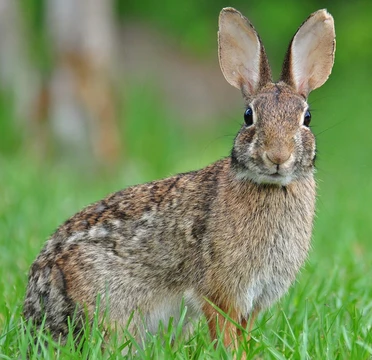
Flying squirrel
Gliding mammals that use a patagium to move between trees.

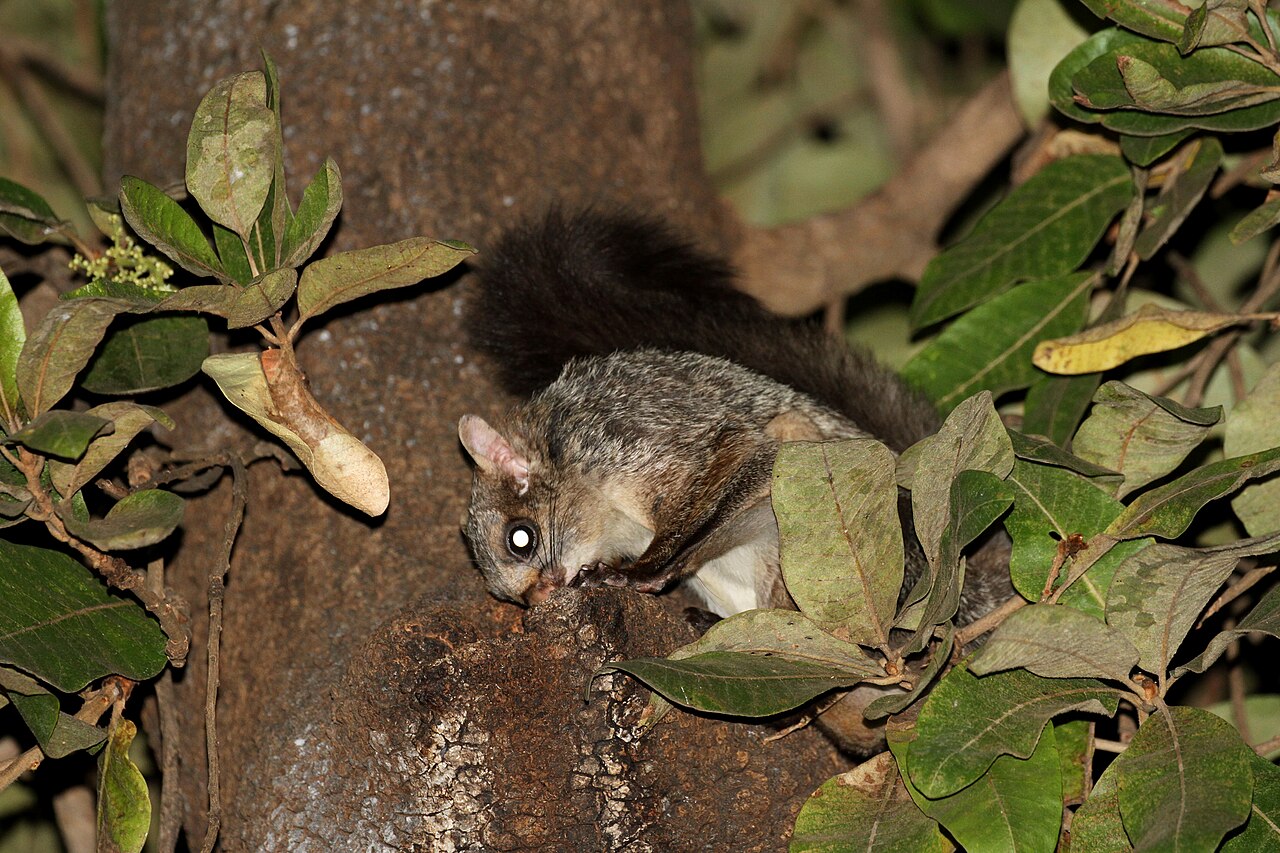
John Manard · CC BY-SA 4.0
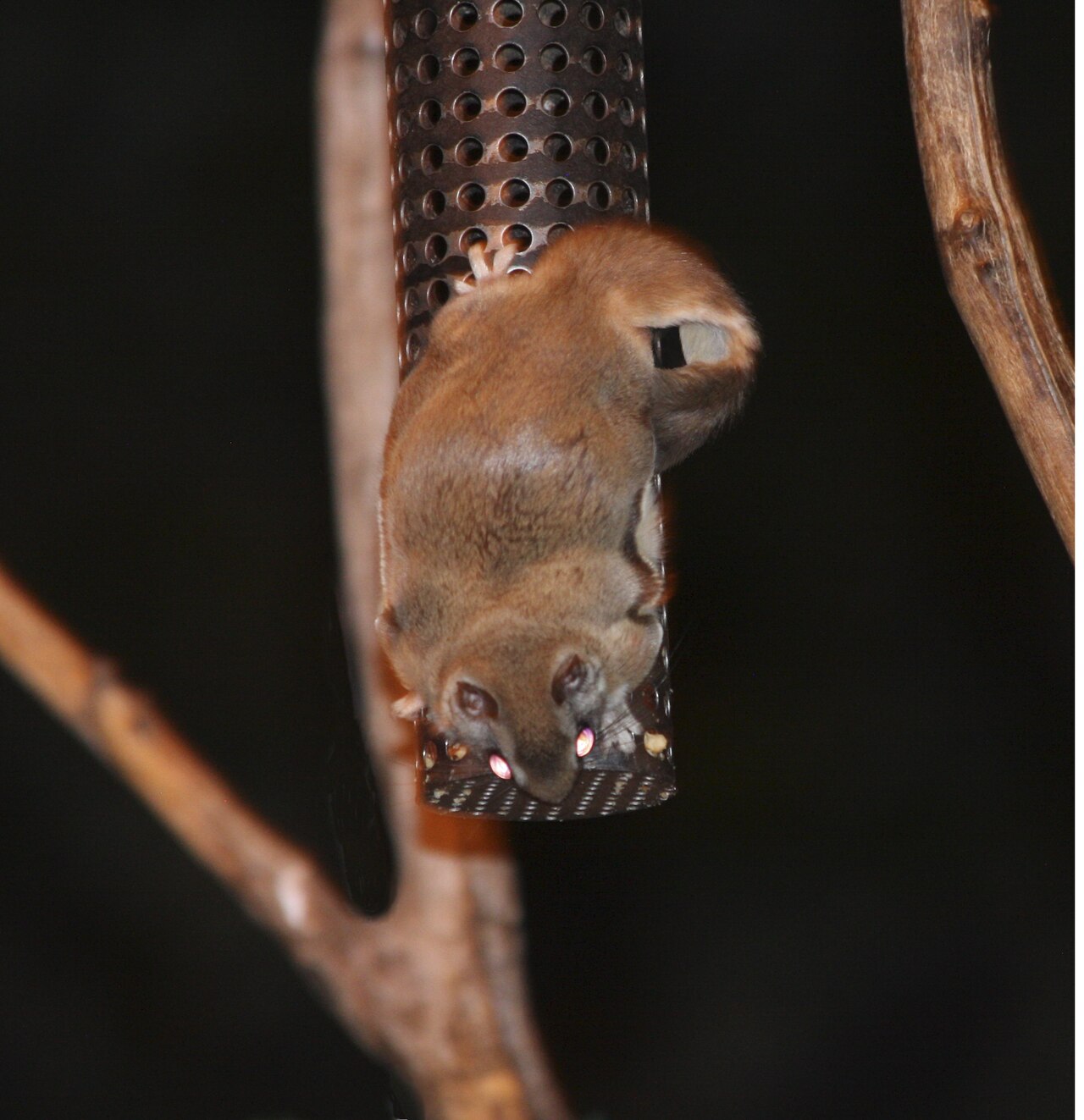
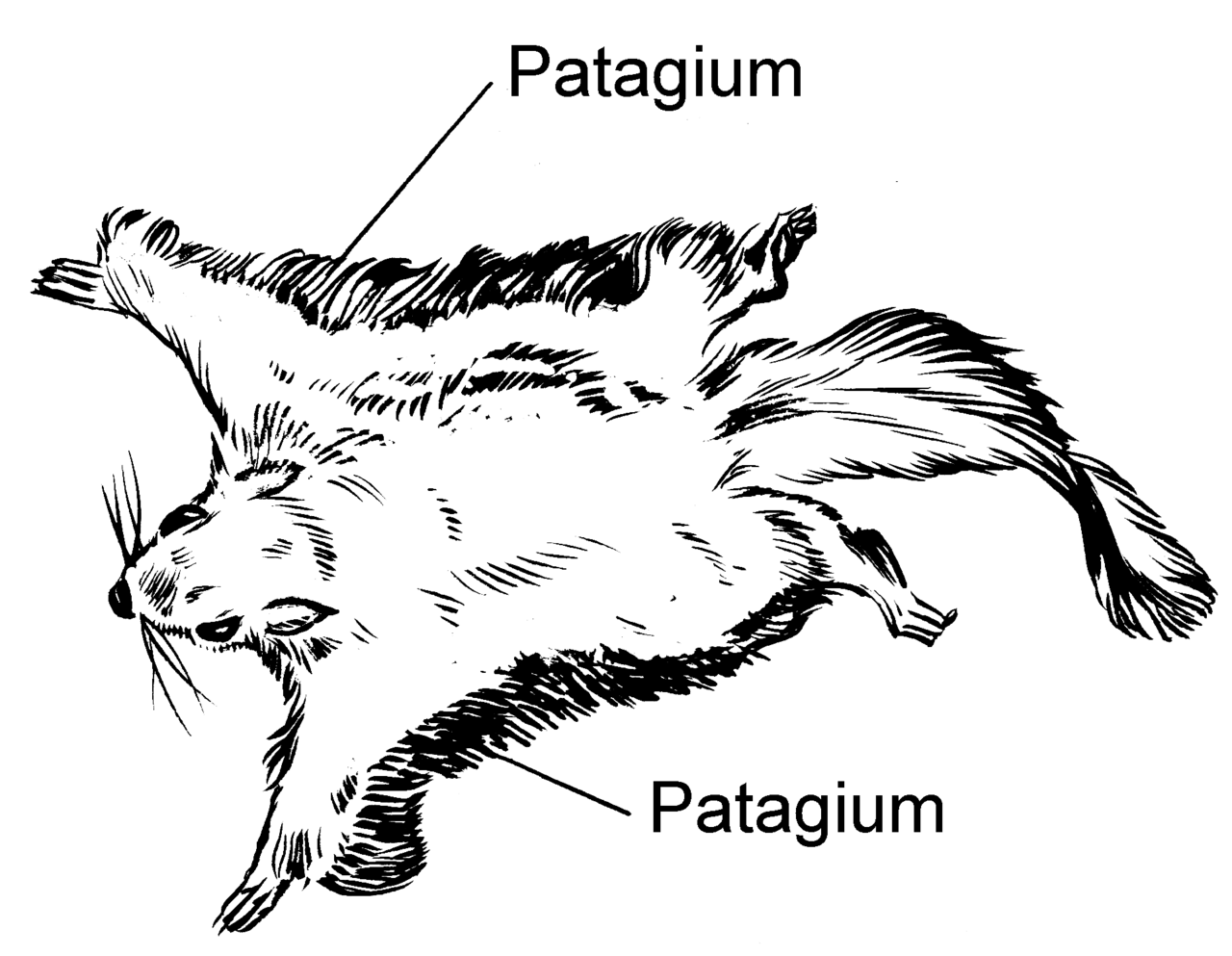
Flying squirrels (tribe Pteromyini or Petauristini) are a group of 50 species of squirrels in the family Sciuridae. They are not capable of full flight like birds or bats but glide between trees using a furred skin membrane called a patagium that stretches from wrist to ankle. Their long tails provide stability, and they can steer and control their glide path with their limbs and tail. Molecular studies show they are monophyletic, originating 18–20 million years ago, with the earliest lineage, Paracitellus, dating to the late Oligocene. Most are nocturnal and omnivorous, and some captive-bred southern flying squirrels have become domesticated as small household pets.
- Scientific name
- Pteromyini or Petauristini
- Number of species
- 50
- Family
- Sciuridae
- Origin
- 18–20 million years ago
- Earliest lineage
- Paracitellus (late Oligocene)
- Known for
- Gliding using a patagium
- Domestication
- Some captive-bred southern flying squirrels kept as pets
Lore & Background
Flying squirrels are anatomically similar to other squirrels but have adaptations for gliding: longer limb bones and shorter hand, foot, and distal vertebrae. They can glide up to 90 meters, using small cartilaginous wrist bones to control direction and speed. The tail acts as an airfoil and air brake before landing. Their patagium is a furry parachute-like membrane that stretches from wrist to ankle. Young are born naked and helpless, cared for by their mother, and begin practicing gliding at five weeks, leaving the nest by ten weeks.
Reader's Guide
Flying squirrels are significant as a distinct tribe within Sciuridae that evolved gliding rather than true flight. Their monophyletic origin and sister relationship with tree squirrels provide insight into the evolution of gliding mechanisms. Morphological differences, such as lengthened lumbar vertebrae and forearm bones, minimize wing loading and increase maneuverability. Gliding is energetically efficient for foraging and helps avoid predators, with take-off and landing procedures reducing injury risk. Non-flying squirrels do not fluoresce. Their legacy includes being one of several gliding mammal groups (alongside colugos, Petauridae, and Anomaluridae) that evolved similar adaptations through convergent evolution. They are also kept as domesticated pets in some cases.
Did You Know?
- Flying squirrels are not capable of true flight like birds or bats; they glide using a patagium.
- They can glide up to 90 meters and steer using their limbs and tail.
- All three species of North American flying squirrels fluoresce pink under UV light.
- The earliest flying squirrel lineage, Paracitellus, dates to the late Oligocene.
The Gliding Frame: Anatomy Built for the Canopy
Flying squirrels belong to the order Rodentia, a lineage that accounts for roughly forty percent of all living mammal species. Their most immediately recognizable feature is the pair of parachute-like membranes that span from the front limbs to the back ones, enabling them to glide from tree to tree rather than simply climb or leap. Beneath that spectacle, however, lies the standard rodent toolkit: a stout body, relatively short limbs, and forefeet bearing five digits that include an opposable thumb. They walk plantigrade, on the full sole of the foot, and their claw-like nails vary in size. In the mouth, a single pair of incisors in each jaw grows without pause; enamel sheathes the front while softer dentine lines the back, so constant gnawing keeps the edges honed into a chisel-shaped cutting surface. Between those incisors and the cheek teeth sits a gap called a diastema, and no canines are present at all. The jaw musculature is powerful, with the masseter anchored behind the eyes, and the lower jaw thrusts forward during a gnawing stroke before shifting back for the chewing cycle.
A World Felt and Tasted
Because their eyes are enlarged for nocturnal activity, flying squirrels navigate a world that is as much auditory and tactile as visual. They possess well-developed senses of smell and hearing, and long, sensitive whiskers called vibrissae extend from their faces; the sweeping motion of those whiskers is largely driven by the brain stem. At the feeding station, the diastema between incisors and molars lets the animal draw in or block out inedible fragments while the chisel-edged front teeth chip away at hard material. The molars, with their complexly ridged grinding surfaces, then reduce the food to fine particles. Cranial anatomy, however, prevents gnawing and chewing from happening simultaneously: the lower jaw must complete its forward thrust for a bite before it can swing back for the chewing cycle. Most of their diet consists of plant material, though some members of their broader order take more varied meals. The masseter, which constitutes the bulk of masticatory muscle mass, contracts and relaxes rapidly during a gnaw, a movement that also causes the eyeballs to shift up and down behind the skull.
Deep Roots, Wide Spread
The rodent lineage to which flying squirrels belong traces its fossil record back to the Paleocene epoch in Asia. A major wave of diversification followed during the Eocene, as members of the group spread across continents and, remarkably, even crossed open ocean. From Africa, rodent ancestors reached South America and Madagascar, and they were the only terrestrial placental mammals to colonize Australia before the arrival of humans. Today, rodents are native to every major landmass except Antarctica and a scattering of isolated oceanic islands, though human activity has since carried them to nearly all of those remaining spots. Flying squirrels share this broad ancestral story: they are part of a clade called Glires, which also includes rabbits, hares, and pikas, all descended from a single common ancestor. Within that vast radiation, the group accounts for approximately forty percent of all mammal species on Earth, a testament to how thoroughly one body plan—stout frame, short limbs, ever-growing front teeth—has been adapted to nearly every terrestrial niche.
Social Lives and Ecological Threads
Like many of their rodent relatives, flying squirrels tend to be social animals, and numerous species in the order live in groups that maintain complex communication systems. Mating strategies across the group range from strict monogamy through polygyny to promiscuity, and offspring come in two broad flavors: altricial litters of underdeveloped young, or precocial pups that are relatively well-formed at birth. Their arboreal lifestyle places them in the canopy, where they use their sharp incisors not only to gnaw food but also to excavate burrows and defend themselves against threats. Rodents as a whole occupy almost every terrestrial habitat, including human-made environments, and their ecological roles are varied. Some species are valued as food, pets, or laboratory subjects, while others—particularly certain rats and mice—become serious pests that spoil stored grain and spread disease. Accidentally introduced populations are frequently labeled invasive. Flying squirrels, with their gliding membranes and tree-to-tree travel, represent the arboreal extreme of a group that also includes burrowers, leapers, and swimmers.
Gallery

Frequently Asked Questions
What is a flying squirrel?
Flying squirrels are a group of 50 rodent species in the family Sciuridae, classified under the tribe Pteromyini (or Petauristini). They are best known for gliding between trees using a specialized skin membrane rather than true powered flight.
How do flying squirrels glide between trees?
They deploy a furred skin membrane called a patagium that stretches from wrist to ankle, creating a wing-like surface for controlled descent. Their long tail provides stability, and they steer their glide path by adjusting their limbs and tail mid-air.
How many species of flying squirrel are there?
There are 50 recognized species in the group. Molecular evidence confirms they form a single, monophyletic evolutionary lineage.
When did flying squirrels first evolve?
Molecular studies place the origin of the group at roughly 18 to 20 million years ago. The earliest identified lineage, Paracitellus, dates to the late Oligocene.
Can flying squirrels actually fly like birds or bats?
No, they are not capable of true powered flight. They rely on gliding via their patagium membrane, which lets them travel between trees in a controlled, steered descent rather than sustained aerial flight.
More in Rodents And Lagomorphs 1-21
Spotted an error? Know more?
This is a living reference — every entry is fact-audited, and reader corrections feed straight into our audit queue. Suggest an edit · See this site's audit record