Agouti
Rodents of genus Dasyprocta, native to Central and South America.

PLAyLuXu · CC BY-SA 4.0
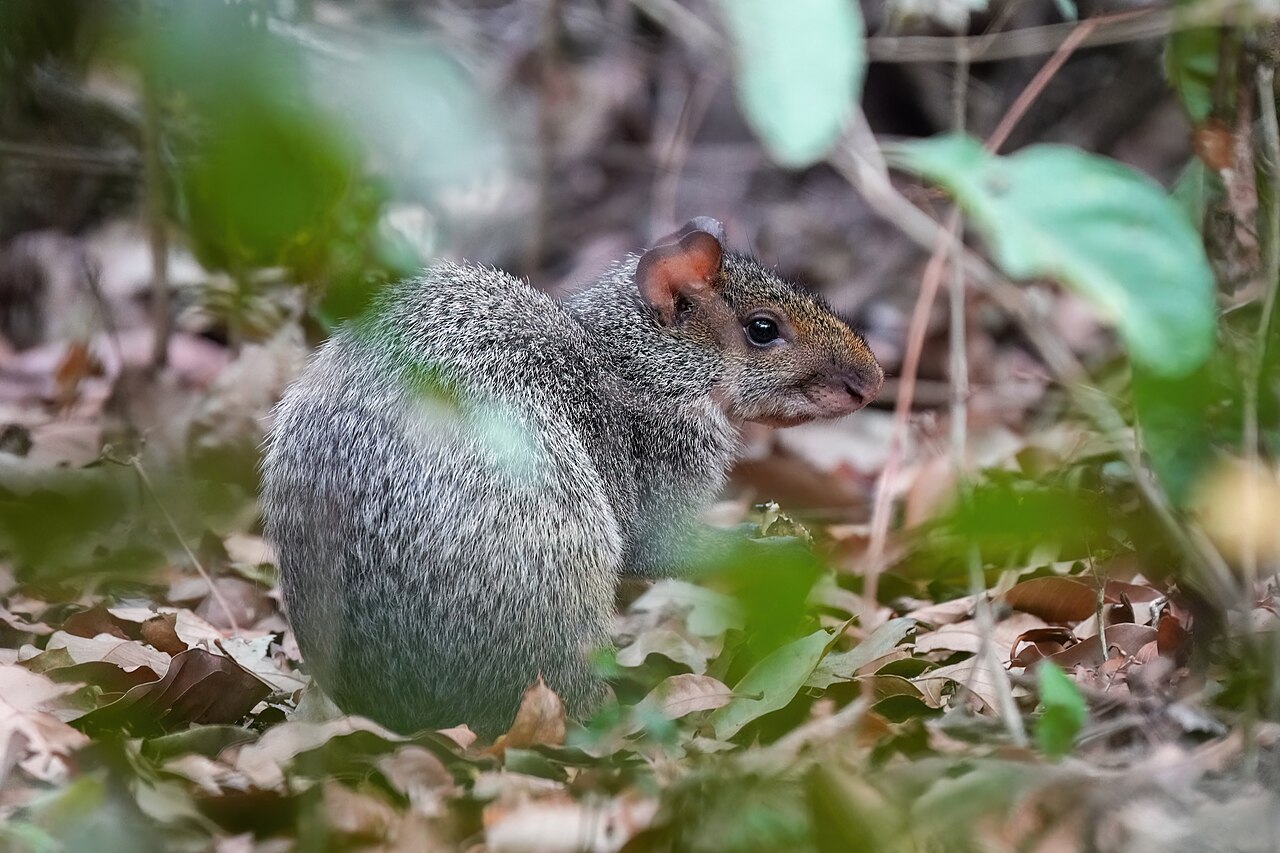
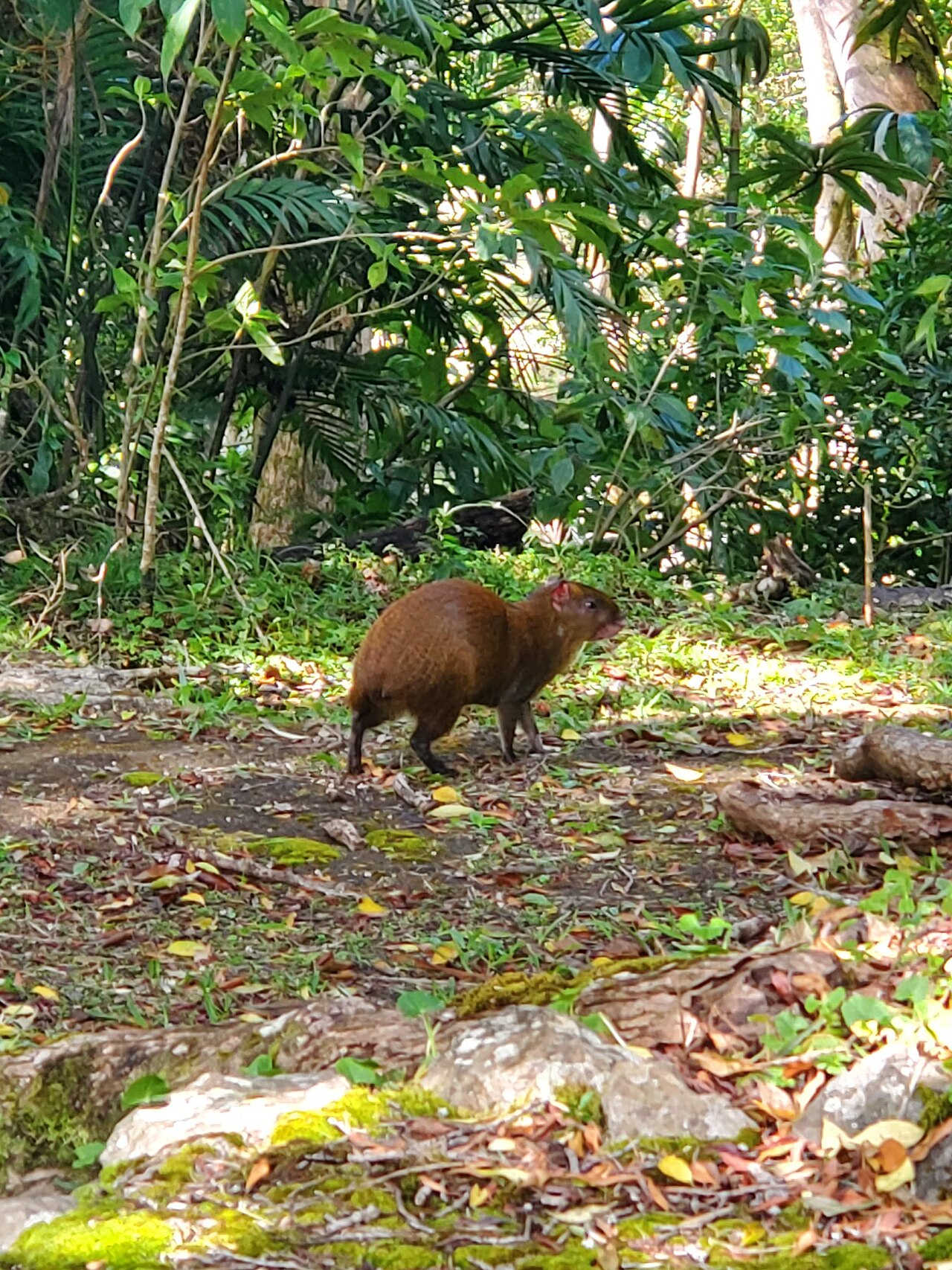
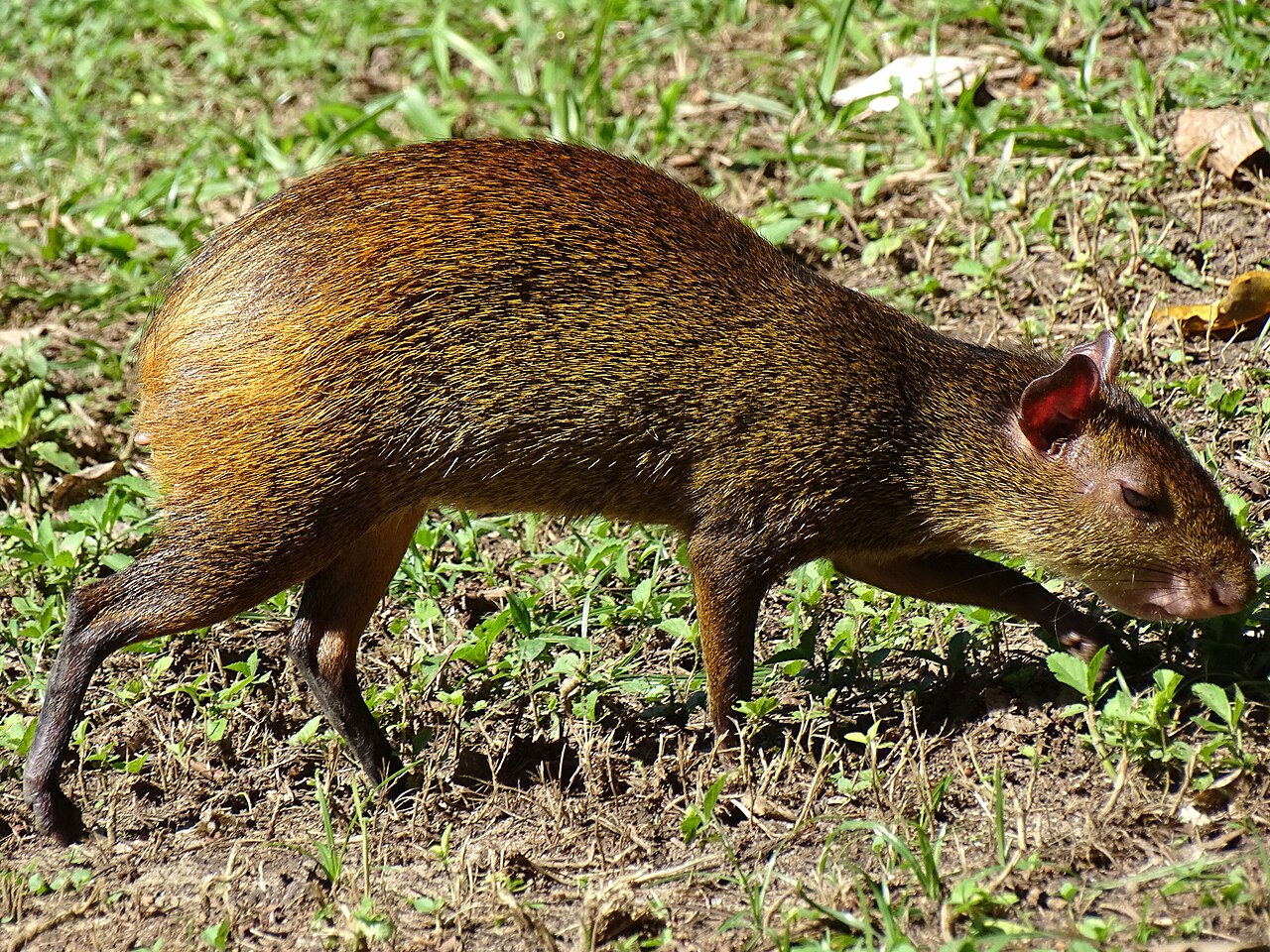
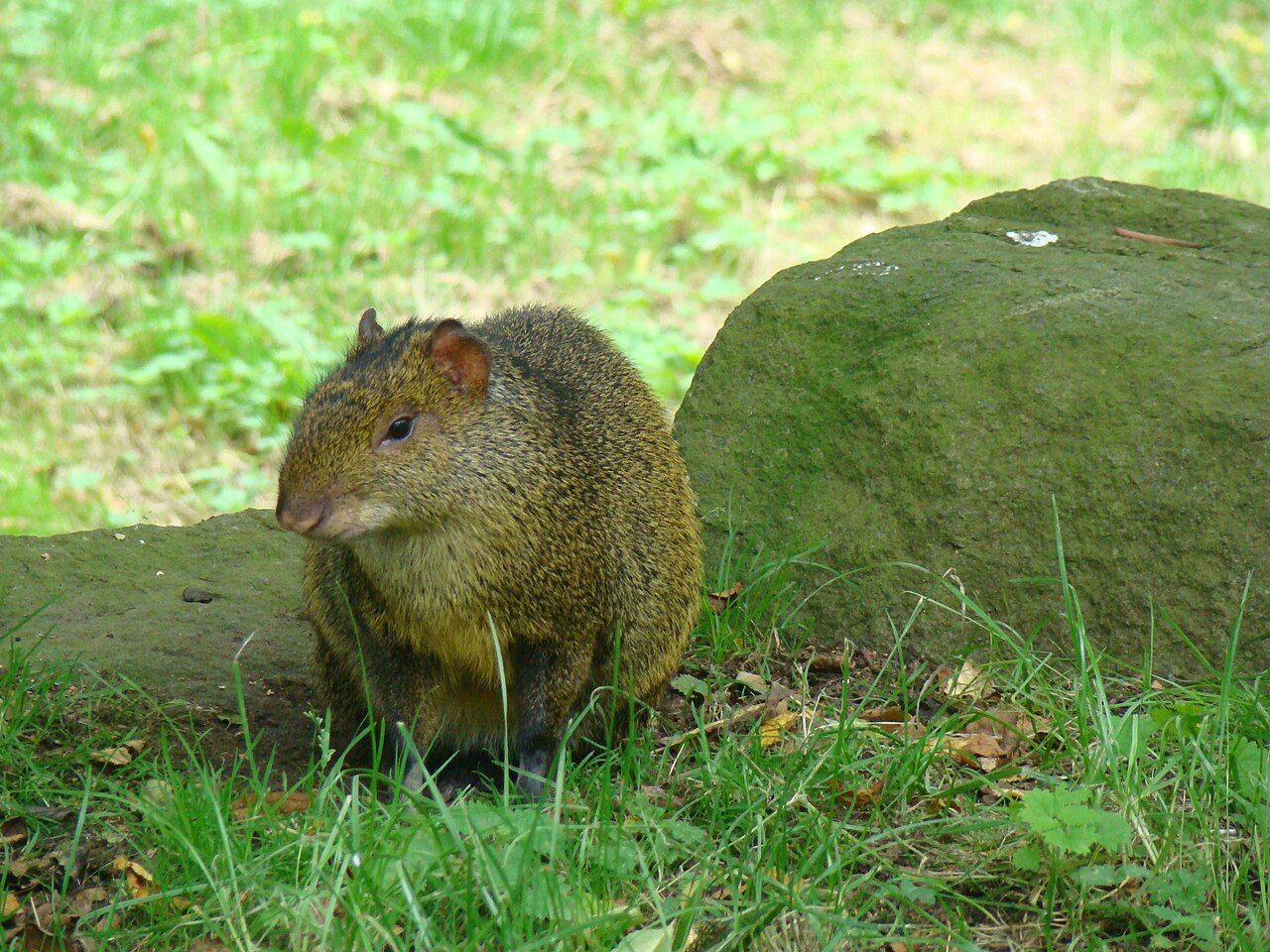
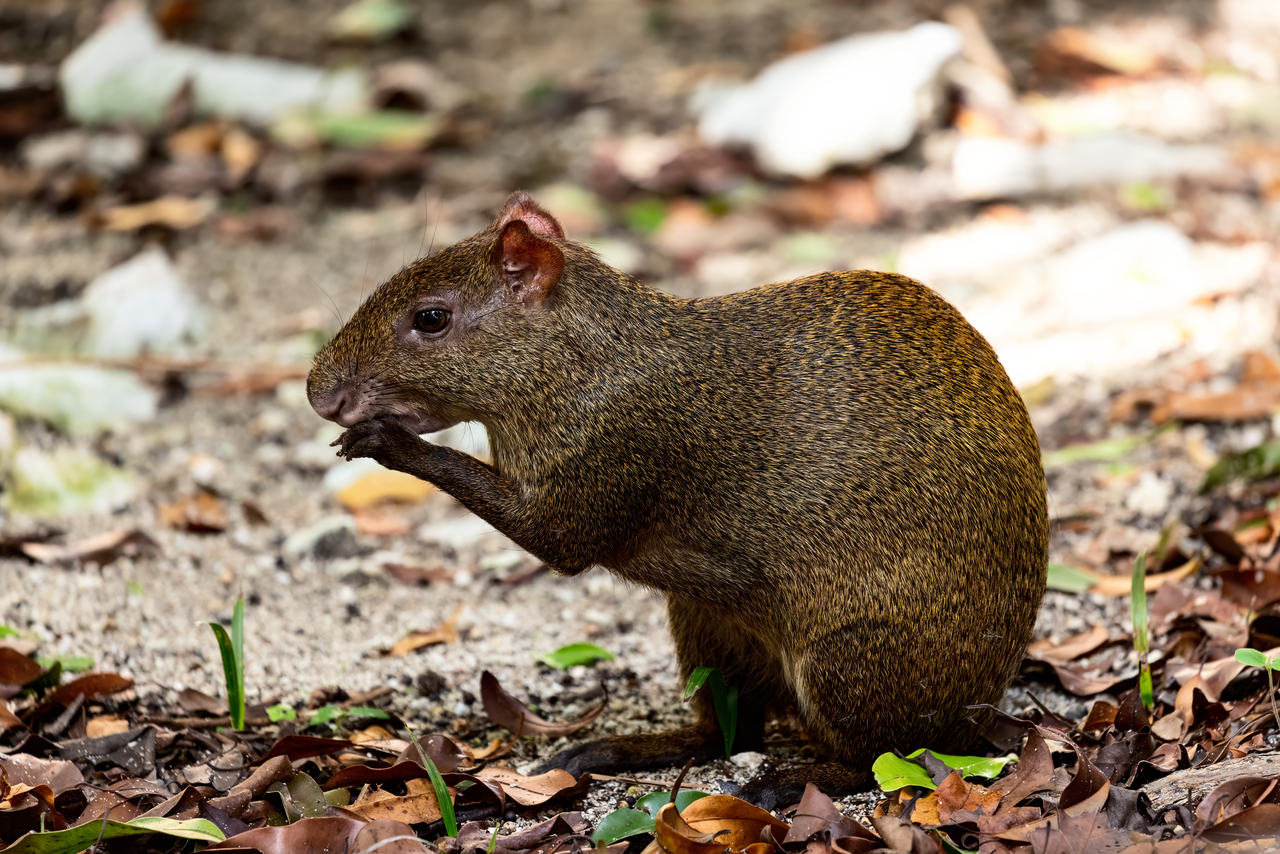
The agouti, also called the common agouti, belongs to the rodent genus *Dasyprocta*—a name derived from ancient Greek words for "hair" and "anus." These animals are native to Central America, northern and central South America, and the southern Lesser Antilles, with some species introduced to other parts of the West Indies and to Benin in West Africa. They are relatives of guinea pigs and resemble them, though agoutis are bigger and have longer legs. Their fur varies widely in color—brown, reddish, dull orange, greyish, or blackish—but is typically lighter underneath, and the coarse hair stands up when the animal is alarmed. The related pacas were once placed in the genus *Agouti* but were reclassified into *Cuniculus* in 1998. In Spanish, they are called *agutí*; in Mexico, *sereque*; in Panama, *ñeque*; and in eastern Ecuador, *guatusa*. The name "agouti" comes from either Guarani or Tupi, South American indigenous languages, where it is written as *akuti*; the Portuguese term *cutia* also derives from this root. Agoutis have five toes on their front feet and three on their hind feet, with the first toe being very small. Their tails are very short or absent and hairless. Their molar teeth have cylindrical crowns with several islands and a single lateral enamel fold. They weigh between 2.4 and 6 kg (5.3–13.2 lb) and measure 40.5–76 cm (15.9–29.9 in) in length. Most species are brown on the back and whitish or buff on the belly, and the fur can appear glossy, sometimes shimmering orange. Reports disagree on whether they are active during the day or night. In the wild, agoutis are shy and flee from humans, but in captivity they can become trusting. In Trinidad, they are known for their speed, able to keep hunting dogs occupied for hours. They live in forests and wooded areas across Central and South America, including rainforests, savannas, and cultivated fields. At night, they hide in hollow tree trunks or burrows among roots. Their movements are active and graceful, using either a trot or a series of rapid springs that resemble a gallop. They are good swimmers and take readily to water. Their diet includes fallen fruit, leaves, and roots, and they may climb trees for green fruit. They hoard food in small buried stores and occasionally
- scientific_name
- Dasyprocta
- native_range
- Central America, northern and central South America, southern Lesser Antilles
- weight
- 2.4–6 kg (5.3–13.2 lb)
- length
- 40.5–76 cm (15.9–29.9 in)
- gestation_period
- 3 months
- lifespan
- Up to 20 years
- litter_size
- 2–4 young
Lore & Background
Agoutis have five toes on their front feet and three on their hind feet; the first toe is very small. The tail is very short or hairless. Their molar teeth have cylindrical crowns with several islands and a single lateral fold of enamel. Most species are brown on their backs and whitish or buff on their bellies; the fur may have a glossy appearance and glimmer in an orange colour. Reports differ as to whether they are diurnal or nocturnal.
Reader's Guide
Agoutis are significant as one of the few species that can open Brazil nuts without tools, using their strength and sharp teeth. They play a role in seed dispersal and forest ecology, hoarding food in buried stores. In southern Brazil, their main energy source is the nut of Araucaria angustifolia. They are also known for their speed and ability to keep hunting dogs occupied for hours. The name 'agouti' derives from Guarani or Tupi languages, and the related pacas were formerly included in genus Agouti but reclassified in 1998 as genus Cuniculus. Agoutis can live up to 20 years, a remarkably long time for a rodent.
Did You Know?
- The name 'agouti' is derived from either Guarani or Tupi, written as 'akuti'.
- Agoutis have five toes on their front feet and three on their hind feet.
- They can live for as long as 20 years, a remarkably long time for a rodent.
- They are one of the few species that can open Brazil nuts without tools.
Coat, Build, and the Absence of Sexual Dimorphism
The Mexican agouti is a medium-sized rodent whose adult mass ranges from two to four kilograms. Total body length, including a short tail of two to three centimetres, spans forty to sixty centimetres, with the head-and-body section making up most of that at roughly forty-four to fifty-six centimetres. What distinguishes this species from other Dasyprocta members is its dorsal coat: a deep black or darkened brown fur with only sparse white hairs interspersed, while the rump and nape carry longer, solid black strands. The ventral surface, chin, and throat shift to a paler, predominantly white palette, and the exposed skin at the base of the ears—three and a half to four and a half centimetres long—appears distinctly pink. The rounded back is supported by two pairs of slender, elongated legs. The forelegs bear four arched, claw-tipped digits suited for excavation, whereas the hindlegs have been reduced to three digits, with a vestigial thumb also present. This size difference between front and rear limbs grants the animal a notable jumping capacity. Strikingly, no sexual dimorphism has been documented; the only reliable method for distinguishing the sexes is palpation of reproductive organs.
Range, Habitat, and Elevation Tolerance
Beyond its native range, the species has been successfully introduced to both the western and eastern portions of Cuba, where it now persists as an extant population. In terms of habitat, Dasyprocta mexicana shows a strong specialization for humid tropical rainforests, lowland evergreen forests, and second-growth woodland. Its elevation tolerance is relatively broad, with documented occurrences between fifty and six hundred metres above sea level. Although direct research on how this species uses its environment remains limited, studies on the closely related Central American agouti (Dasyprocta punctata) suggest that home ranges are centred on key food sources such as fruit trees, with individuals seeking refuge within the trunks of those same trees. Given the physical and life-history parallels between the two species, it is reasonable to hypothesize that the Mexican agouti employs a similar habitat-use strategy.
Monogamy, Gestation, and Early Development
The Mexican agouti practises a monogamous mating system, with breeding pairs each defending a territory of one to two hectares. Reproduction is viviparous, with a gestation period estimated at one hundred and four to one hundred and twenty days. Litter size is small—typically one or two young—born during the dry season, roughly March through May. While the exact age of sexual maturity in this species is not yet documented, closely related Dasyprocta species reach it as early as six months. Pups are born precocial: fully furred, with eyes open, and within a single day of birth they are already nursing, grooming, and foraging in leaf litter. The lactating female does not directly supply solid food; instead, the young shadow her during foraging trips and consume whatever she eats. Nursing continues for up to seven weeks post-partum, after which the pups remain tolerated within the family territory. Learning appears to play a central role in shaping their dietary preferences, though over time the young are observed exploring and consuming foods beyond those their mother introduces. During pregnancy, females have been noted to increase their seed intake, boosting protein, fat, and energy levels, and they use crevices or existing burrows as birthing sites.
Agility, Activity Rhythms, and Longevity
The Mexican agouti is described as a highly agile and alert animal, always prepared to bolt when danger approaches. Its behaviour is heavily shaped by the surrounding environment, including the presence of humans and other predators. Like other members of the Dasyproctidae family, this species is naturally diurnal and crepuscular, most active during daylight and twilight hours. However, under sustained pressure or threat, it can shift into a nocturnal activity pattern as a survival strategy. Its terrestrial lifestyle has also driven morphological changes over time, including a reduction in the number of digits on its limbs and the presence of a vestigial thumb, while the four arched claws on the forelegs remain well adapted for digging. Regarding longevity, a captive study—conducted on a small sample—recorded a maximum lifespan of thirteen and a half years, offering the best available estimate of how long this species can live under controlled conditions. In the wild, the combination of predation pressure, habitat requirements, and the demands of a monogamous territorial lifestyle likely shapes the full arc of an individual's life.
Gallery

Frequently Asked Questions
What is an agouti?
The agouti (genus Dasyprocta) is a medium-sized rodent closely related to guinea pigs, though it's larger and has noticeably longer legs. It's the species most people mean when they say 'common agouti.'
Where do agoutis live in the wild?
They're native to Central America, the northern and central parts of South America, and the southern Lesser Antilles. A handful of populations were also introduced by humans to other West Indian islands and to Benin in West Africa.
How big and heavy is an adult agouti?
Adults typically weigh between 2.4 and 6 kg (about 5.3–13.2 lb) and measure roughly 40.5–76 cm (16–30 in) in body length, making them a solid step up in size from a guinea pig.
How long can an agouti live?
Under good conditions an agouti can reach about 20 years of age, which is impressive for a rodent of its size. Females carry their young for around three months before giving birth.
What does an agouti's coat look like?
Their coarse fur comes in shades of brown, reddish, dull orange, greyish, or blackish, and the belly is usually a lighter tone than the back. This two-toned, coarse-haired appearance is one of the easiest ways to spot them in the underbrush.
More in Rodents And Lagomorphs 1-21
Spotted an error? Know more?
This is a living reference — every entry is fact-audited, and reader corrections feed straight into our audit queue. Suggest an edit · See this site's audit record