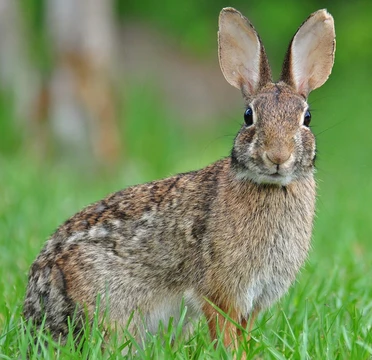
Brown rat
A widespread, adaptable rodent that thrives alongside humans.

The brown rat (*Rattus norvegicus*) goes by many names—common rat, street rat, sewer rat, wharf rat, Hanover rat, Norway rat, and Norwegian rat. It is a large rodent, one of the biggest in its family, with brown or grey fur, a body up to 28 cm (11 in) long, and a tail a bit shorter. The species likely first appeared in northern China and nearby regions, but it has since spread to every continent except Antarctica. It is now the most common rat in Europe and much of North America, having become established worldwide. Brown rats almost always live near people, especially in cities. They eat almost anything, breed quickly, and can carry several diseases that affect humans. Through selective breeding, the brown rat gave rise to the fancy rat (kept as a pet) and the laboratory rat (used in research). Both belong to the domesticated subspecies *Rattus norvegicus domestica*. Studies of wild rats in New York City have found that populations in different neighborhoods can develop distinct genetic profiles over time as they slowly pick up different traits.
**Naming and etymology**
The brown rat was first called the "Hanover rat" by people in 18th-century England who wanted to link problems to the House of Hanover. Why it ended up with the scientific name *Rattus norvegicus* (Norwegian rat) is uncertain, since it did not come from Norway. The English naturalist John Berkenhout likely spread the mistake. By the early to mid-1800s, British scholars thought the brown rat was not native to Norway, though they incorrectly guessed it might have come from Ireland, Gibraltar, or with William the Conqueror across the English Channel. The novelist Charles Dickens mentioned this in his journal *All the Year Round*, noting that the rat was often called the Norway rat and said to have arrived in a timber shipment from Norway. He pointed out that when the brown rat became common in England, it was still unknown in Norway—though a similar-looking lemming lived there. By the late 1800s, academics favored this revised view. In his 1895 book *Natural History*, American scholar Alfred Henry Miles wrote
- Scientific name
- Rattus norvegicus
- Body length
- up to 28 cm (11 in)
- Origin
- northern China and neighbouring areas
- Distribution
- all continents except Antarctica
- Diet
- omnivorous
- Known for
- living wherever humans live, rapid reproduction, vector for human diseases
Lore & Background
The brown rat was originally called the 'Hanover rat' by people wishing to link problems in 18th-century England with the House of Hanover. It is not known for certain why it is named Rattus norvegicus (Norwegian rat), as it did not originate from Norway. By the early to middle part of the 19th century, British academics believed it was not native to Norway, hypothesizing (incorrectly) that it may have come from Ireland, Gibraltar or across the English Channel with William the Conqueror. Academics began to prefer this etymology towards the end of the 19th century, and by the 20th century, it was believed among naturalists that the species came from Central Asia and (likely) China.
Reader's Guide
The brown rat is significant as a highly adaptable species that has spread across the globe alongside human populations, becoming the dominant rat in Europe and much of North America. Its omnivorous diet, rapid reproduction (a female can produce up to five litters a year, with a gestation period of only 21 days), and ability to live in urban areas make it a persistent presence in human environments. It can be a vector for several human diseases. Selective breeding of the brown rat has produced the fancy rat (kept as pets) and the laboratory rat (used as model organisms in biological research), both of the domesticated subspecies Rattus norvegicus domestica. Studies of wild rats in New York City have shown that populations living in different neighborhoods can evolve distinct genomic profiles over time. The brown rat also exhibits complex behaviors, including metacognition (a mental ability previously only found in humans and some other primates), ultrasonic vocalizations, and social learning, such as diving for mollusks demonstrated by some colonies along the Po River in Italy.
Did You Know?
- The brown rat is one of the largest muroids, with a body length of up to 28 cm (11 in) and a tail slightly shorter than that.
- It is thought to have originated in northern China and neighbouring areas, not Norway despite its scientific name Rattus norvegicus.
- Selective breeding of the brown rat has produced the fancy rat (pets) and the laboratory rat (model organisms), both of the subspecies Rattus norvegicus domestica.
- Brown rats are capable of producing ultrasonic vocalizations, including a 'chirping' sound likened to laughter, which is too high-pitched for humans to hear without special equipment.
Frequently Asked Questions
Who is Brown rat?
Brown rat (Rattus norvegicus) is a large, omnivorous rodent also known by nicknames like common rat, sewer rat, wharf rat, and Hanover rat. It is one of the biggest members of the rat family and is the most widespread rat species on Earth.
Where did Brown rat originate and where does it live now?
The species most likely first appeared in northern China and neighbouring regions. Through human-assisted spread it has since colonised every continent except Antarctica, becoming the dominant rat in Europe and much of North America.
What does Brown rat eat?
Brown rat is a true omnivore, taking in whatever food source is available in its environment, from seeds and grains to insects, meat scraps, and human refuse. This dietary flexibility is a major reason it thrives in so many different habitats.
Why is Brown rat important in the rodent-and-lagomorph community?
It is the single most common rat species worldwide and a textbook example of how a small, adaptable mammal can ride human trade routes to every inhabited continent. Its size, prolific breeding, and generalist diet make it the default 'big rat' that fans and field biologists alike benchmark against.
More in Rodents And Lagomorphs 1-21
Spotted an error? Know more?
This is a living reference — every entry is fact-audited, and reader corrections feed straight into our audit queue. Suggest an edit · See this site's audit record